



Why Are Some Wrist Rests Curved? The Engineering Behind Ergonomic Wrist Rest Shapes

A curved wrist rest is not simply a different aesthetic choice. Its shape is based on ergonomic principles, hand anatomy, pressure distribution, and the relationship between the keyboard, palm, and forearm. Understanding why wrist rests are curved helps explain why different designs feel completely different during long typing sessions.
Why Do Wrist Rests Have Different Shapes?
When comparing keyboard wrist rests, one of the first differences people notice is the shape. Some models are completely flat, while others have a gentle upward curve, a raised center section, or a more pronounced ergonomic contour.
These differences are not random design choices. A wrist rest is an interface between two moving systems: the human hand and the keyboard. Because hands are naturally curved structures rather than flat surfaces, designers adjust wrist rest geometry to better match how the palm contacts a support surface.
According to workplace ergonomics recommendations from organizations such as OSHA and CCOHS , proper wrist support should help users maintain a more neutral and comfortable wrist position rather than creating additional pressure points.
Flat Wrist Rests
Flat designs provide a simple and predictable support surface. They are often preferred by users who frequently change hand positions or need maximum freedom of movement.
Curved Wrist Rests
Curved designs follow the natural shape of the palm and create a gradual transition between the keyboard height and the resting area.
Contoured Wrist Rests
More advanced shapes use additional shaping to guide hand placement and improve consistency during extended typing.
The important question is therefore not whether curved wrist rests are universally better. The real question is why engineers choose specific shapes for specific usage scenarios.
The Human Anatomy Behind Curved Wrist Rest Design
To understand curved wrist rests, it is necessary to first understand that the human hand is naturally three-dimensional. The palm contains multiple contact areas, including the thenar region near the thumb and the broader padded areas below the fingers.
A completely flat surface does not always match these natural contours. During typing, the hands are constantly making small adjustments as fingers move, wrists rotate slightly, and forearms change position.
A curved wrist rest attempts to accommodate these movements by creating a smoother support surface instead of forcing the palm to adapt to a completely flat platform.
The Wrist Is Designed for Movement, Not Static Support
The wrist joint allows multiple types of movement, including flexion, extension, and rotation. Because typing involves thousands of repeated movements, small differences in support geometry can influence how comfortable a position feels over time.
Workstation ergonomics guidelines from OSHA's Computer Workstations Guidelines emphasize that wrist and palm support should help users maintain a comfortable working position without creating unnecessary pressure or restricting movement.
This is why ergonomic recommendations typically focus on maintaining a neutral wrist posture rather than simply adding more cushioning.
Why Palm Shape Matters
The palm is naturally curved. When a support surface follows this shape, pressure can be distributed across a larger area instead of concentrating on smaller contact zones.
This principle is similar to many other ergonomic products: chairs, mouse supports, and footwear often use curved surfaces because the human body itself is not composed of flat geometric surfaces.
Why Curved Design Is More Than Appearance
Many users assume curved wrist rests are designed mainly for visual appeal. However, the curve affects several functional characteristics:
A curved wrist rest can influence:
- How the palm contacts the support surface
- How smoothly the hand transitions from keyboard to wrist rest
- How pressure is distributed across the support area
- How different hand sizes interact with the same design
- How comfortable the wrist position feels during longer typing sessions
This is why ergonomic wrist rest design is closer to product engineering than simple product styling. The shape represents a series of compromises between support, movement, keyboard compatibility, and user preference.
The Engineering Principles Behind Wrist Rest Curvature
A curved wrist rest is the result of several engineering decisions rather than a simple attempt to make a product look more ergonomic. Designers must consider how the human hand interacts with a support surface, how weight is distributed, and how the wrist transitions between the keyboard and the resting area.
The geometry of a wrist rest should also be considered together with its overall dimensions. A curve that feels comfortable on one keyboard may feel completely different on another because keyboard height, width, and user hand position all affect the final typing experience. For a deeper explanation of how dimensions influence ergonomic compatibility, see our Ultimate Wrist Rest Size Guide for Mechanical Keyboards .
The challenge is that a wrist rest must support the hand without restricting natural movement. A shape that is too flat may not match the palm structure, while a shape that is too aggressive may create a feeling of being locked into one position.
1. Curvature Radius: The Foundation of a Curved Wrist Rest
One of the most important engineering factors behind a curved wrist rest is the radius of curvature. This describes how gradually or sharply a surface changes direction.
A larger curvature radius creates a gentle slope, while a smaller radius creates a more pronounced curve. In practical use, this difference changes how the palm contacts the surface and how quickly pressure changes across the support area.
| Curvature Type | Design Characteristics | Typical User Experience |
|---|---|---|
| Large radius curve | Gentle transition with a subtle contour | Feels natural and allows more movement |
| Moderate radius curve | Balanced support and contouring | Often preferred for long typing sessions |
| Small radius curve | More noticeable ergonomic shaping | Provides stronger guidance but may feel restrictive for some users |
This explains why two curved wrist rests can feel completely different even if both are described as “ergonomic.” The amount and position of curvature determine how the hand interacts with the surface.

2. Contact Area: Why Shape Changes Comfort
Another important engineering concept is contact area. When the palm rests on a support surface, the body weight is transferred through the points where the hand touches the wrist rest.
A poorly matched shape can create concentrated contact zones. A carefully designed curve can spread support across a wider area by following the natural structure of the palm.
Surface Geometry and Pressure Distribution
A wrist rest does not support the hand through height alone. Its surface geometry determines how contact forces are transferred between the palm and the support material.
- Flat designs: provide a uniform platform, but the palm may only contact the surface at specific areas where the hand naturally carries more pressure.
- Curved designs: create a gradual surface transition that follows the three-dimensional structure of the palm, allowing support forces to be distributed across a broader area.
The engineering objective is not to eliminate pressure completely, but to manage how pressure is distributed while preserving natural hand movement.
This does not mean every curved wrist rest automatically performs better. The effectiveness depends on the relationship between curvature, height, firmness, and the user's typing position.
How Curvature Changes Pressure Distribution
Pressure distribution is one of the biggest reasons engineers experiment with curved wrist rest designs.
When a support surface matches the natural shape of the hand more closely, the contact force can be distributed more evenly. When the shape does not match the user's anatomy, pressure may become concentrated in specific areas.
This principle is widely used in ergonomic product design. For example, office chairs, bicycle seats, and footwear all rely on surface geometry to manage how forces interact with the human body.
The Relationship Between Shape and Pressure
| Design Factor | Potential Effect |
|---|---|
| More gradual curvature | Creates smoother palm transition and less abrupt surface changes |
| Higher central contour | May provide stronger palm support but can reduce repositioning freedom |
| Poor height matching | Can create unnecessary wrist elevation |
| Appropriate surface firmness | Helps maintain consistent support without excessive sinking |
The Relationship Between Keyboard Height and Wrist Rest Shape
A wrist rest does not work independently. Its effectiveness depends heavily on the keyboard it is paired with.
Mechanical keyboards, especially those with taller keycaps and higher cases, create a larger vertical difference between the desk surface and the typing area. In these situations, some users prefer a wrist rest with more structured shaping because it creates a smoother transition.
Low-profile keyboards and laptops create different requirements. A highly elevated wrist rest may introduce unnecessary height and may not feel natural.
| Keyboard Type | Common Wrist Rest Consideration |
|---|---|
| High-profile mechanical keyboard | A contoured or moderately curved wrist rest may better match the keyboard height |
| Low-profile mechanical keyboard | A thinner, less pronounced curve may provide better flexibility |
| Laptop keyboard | Minimal elevation is often preferred because the keyboard itself is already low |
This is why recommending a single “best” wrist rest shape is difficult. Ergonomic design depends on the entire typing system, not one individual component.
Curved vs Flat Wrist Rests: Which Design Works Better?
The debate between curved and flat wrist rests is often oversimplified. A curved design is not automatically better for every user, and a flat design is not automatically outdated.
The better choice depends on typing habits, keyboard height, movement patterns, and personal preference.
| Feature | Curved Wrist Rest | Flat Wrist Rest |
|---|---|---|
| Support feeling | More shaped support that follows palm contours | Simple and consistent support surface |
| Movement freedom | Depends on curve intensity | Often allows easier repositioning |
| Long typing sessions | Can provide a smoother hand transition when properly matched | Works well for users who prefer minimal structure |
| Keyboard compatibility | Often beneficial for taller keyboards | Suitable for many keyboard layouts |
| Adjustment period | May require adaptation because of the contour | Usually feels immediately familiar |
The most important factor is not choosing the most curved option. It is choosing a shape that matches the user's hand position, keyboard height, and typing behavior.
How Materials Influence Curved Wrist Rest Performance
The shape of a wrist rest is only one part of ergonomic performance. The material used beneath that shape determines how the curved surface responds during everyday typing.
Two wrist rests can have identical external curves but provide very different experiences because material properties such as firmness, compression behavior, surface texture, and structural stability influence how the support feels over time.

For example, memory foam can allow a curved surface to adapt slightly to the user's palm, while firmer materials can maintain the original ergonomic profile more consistently. These differences affect comfort, support stability, and long-term performance during extended typing sessions.
To better understand how materials such as memory foam, PU leather, silicone, and other surfaces influence wrist rest comfort and durability, explore our wrist rest material comparison guide .
Ergonomic accessory brands such as Goldtouch also demonstrate how modern wrist support designs combine factors such as support height, surface feel, and ergonomic positioning rather than relying on shape alone.
| Material | How It Interacts With Curved Design | Common Characteristics |
|---|---|---|
| Memory Foam | Allows the curved surface to adapt slightly to the user's palm shape | Soft support, pressure adaptation, slower recovery |
| PU Leather + Foam | Combines structured contouring with a smooth contact surface | Easy maintenance, balanced comfort, premium appearance |
| Silicone | Maintains consistent surface geometry while providing flexibility | Stable, washable, durable |
| Wood | Keeps the designed curve very consistent over time | Firm support, stable shape, natural texture |
Practical Observation: Why Identical Shapes Can Feel Different
During hands-on comparisons of different wrist rest designs, one noticeable difference is that identical curved profiles can produce very different comfort experiences depending on the material underneath.
A softer surface may feel more adaptive because it conforms slightly to the palm, while a firmer structure often provides a more consistent support shape over longer periods of use.
This shows that ergonomic performance is not determined by curvature alone. The interaction between geometry, material firmness, and user preference ultimately determines how a wrist rest feels in daily typing situations.
Why Firmness Matters With Curved Shapes
A very soft material may reduce the intended effect of a curved design because the surface can compress significantly under pressure. A very hard material may preserve the geometry but provide less adaptability.
This creates an important design balance: the wrist rest needs enough structure to maintain its ergonomic shape while providing enough comfort for repeated daily use.
Real-World Testing Notes: What Different Wrist Rest Shapes Feel Like During Daily Use
When comparing different wrist rest designs in practical typing situations, the biggest differences are usually not noticed immediately during a few minutes of use. They become more apparent during longer sessions involving repeated keyboard movement.
Several practical observations commonly appear when testing different wrist rest geometries:
Hands-on observations
- A moderate curve often feels more natural because it creates a gradual transition from keyboard height to palm support.
- Very flat surfaces may feel simple and predictable, especially for users who frequently move their hands.
- Highly contoured designs may feel supportive for some users but may require adjustment because they guide hand placement more strongly.
- Material firmness changes the experience significantly. A supportive curve can feel different depending on whether the surface compresses or maintains its structure.
These observations highlight an important point: ergonomic design is not only about measurements. User interaction, typing habits, and personal preference all influence whether a specific shape feels comfortable.
Common Curved Wrist Rest Design Mistakes
Although curved wrist rests are designed to improve support, not every curved design provides the same experience. Several common design mistakes can reduce effectiveness.
Mistake 1: Making the Curve Too Aggressive
A strong contour may appear more ergonomic, but excessive shaping can limit natural hand movement. A wrist rest should support the palm without forcing the user into a single fixed position.
Mistake 2: Ignoring Keyboard Height
A curved wrist rest must be evaluated together with the keyboard. A shape that works well with a tall mechanical keyboard may feel unnecessary with a thin laptop keyboard.
Mistake 3: Focusing Only on Softness
Many users assume softer means more comfortable. However, excessive softness can reduce stability and change the intended ergonomic geometry of the product.
Mistake 4: Designing for Appearance Instead of Interaction
A dramatic curve may look ergonomic but still perform poorly if it does not match how users actually position their hands while typing.
How to Choose the Right Wrist Rest Shape
Choosing a curved wrist rest is not about finding the highest or most sculpted design. The ideal shape depends on your keyboard, typing style, and how much support you prefer.
The decision between different wrist rest designs ultimately depends on typing habits, workstation setup, and personal preference. Some users benefit from additional support, while others prefer greater freedom of movement.
For a broader comparison of whether wrist rests are suitable for different typing styles and workstation setups, read our guide: Wrist Rest vs No Wrist Rest: Which Is Better for Typing? .
| User Situation | Recommended Shape Consideration |
|---|---|
| Long daily typing sessions | Moderate curved designs may provide a smoother transition between keyboard and palm |
| Competitive gaming | Lower-profile designs may provide more freedom for quick hand movement |
| Tall mechanical keyboards | A contoured wrist rest may better match the increased keyboard height |
| Laptop or low-profile keyboards | A thinner design may avoid unnecessary elevation |
Before choosing a curved wrist rest, consider:
- Keyboard height and case profile
- Preferred wrist movement freedom
- Material firmness
- Amount of palm support needed
- Whether you prefer structured or flexible support
Frequently Asked Questions About Curved Wrist Rests
Are curved wrist rests better than flat wrist rests?
Not necessarily. Curved wrist rests may provide a more natural palm transition for some users, while flat designs may be preferred by users who want maximum freedom of movement. The best choice depends on keyboard height, hand position, and personal preference.
Why are mechanical keyboard wrist rests often curved?
Mechanical keyboards are often taller than low-profile keyboards because of their keycaps and case design. A curved wrist rest can help create a smoother transition between the keyboard surface and the palm support area.
Does a curved wrist rest improve typing posture?
A properly matched wrist rest may help users maintain a more comfortable hand position. However, overall typing posture also depends on keyboard placement, chair height, desk setup, and typing habits.
Can a curved wrist rest be uncomfortable?
Yes. A curve that is too high, too firm, or poorly matched to the user's keyboard can feel restrictive. Ergonomic design requires balance between support and movement.
What is the most ergonomic wrist rest shape?
There is no universal shape that works for everyone. A moderate contour that matches the user's keyboard height and preferred typing position is often a practical choice.
Final Thoughts: Why Wrist Rest Curvature Matters
The curve of a wrist rest represents a combination of ergonomics, engineering, and user experience. It influences how the palm contacts the surface, how pressure is distributed, and how smoothly the hand transitions during typing.
The best wrist rest design is not the one with the most dramatic shape. It is the one that creates the right balance between support, movement, material behavior, and compatibility with the user's keyboard.
Understanding the engineering behind wrist rest shapes helps users make better decisions and explains why different designs exist in the market.

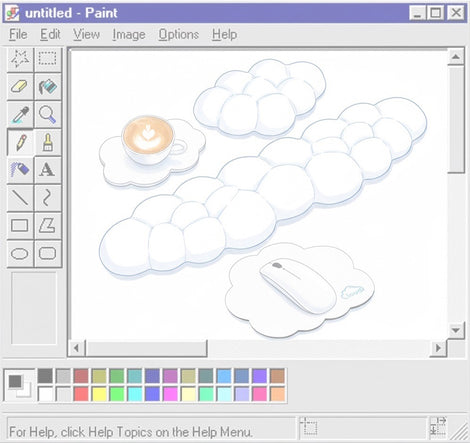
Cloud Tenkeyless Memory Foam Wrist Rest Set
Designed for compact and tenkeyless mechanical keyboards, this wrist rest combines a supportive curved profile with memory foam cushioning and a smooth PU leather surface. The balanced shape helps create a comfortable transition between the keyboard height and palm support area while maintaining a clean desk setup.
- ✔ Designed for TKL and compact mechanical keyboards
- ✔ Memory foam construction for adaptive palm support
- ✔ PU leather surface for smooth, easy maintenance

4-in-1 Ergonomic Cloud Memory Foam Wrist Rest Set
A flexible wrist support solution for users with multiple devices or changing workstation setups. The multi-piece design provides matching support options for keyboards, laptops, and mouse areas while maintaining consistent ergonomic positioning across different workflows.
- ✔ Multi-piece design for different desk setups
- ✔ Memory foam support with comfortable surface response
- ✔ Anti-slip base for stable placement during use